Wild Himalayan Keedajadi (Ophiocordyceps sinensis)

Wild Himalayan Keedajadi (Ophiocordyceps sinensis) by Alchemy Dose

Traditionally valued in Tibetan, Himalayan, and Ayurvedic wellness practices — wild-harvested from traditional Uttarakhand suppliers at 11,000 ft / 3,500 m above sea level.

WHY PEOPLE CHOOSE
  • 1
    Wild-Harvested at 11,000 ft / 3,500 mSourced from traditional Uttarakhand suppliers in the high Himalaya — Pithoragarh and Chamoli districts.
  • 2
    Centuries of Cultural DocumentationDocumented in classical Tibetan, Indian Ayurvedic, and East Asian traditional wellness practices.
  • 3
    Brief May-June Harvest WindowHand-foraging from alpine meadows above the tree line during a 4-6 week annual window.
  • 4
    Whole Caterpillar-Fungus FormNaturally occurring polysaccharide, adenosine, and D-mannitol compound profile in the whole-fungus structure.
Known for its: Rare Wild Harvest High-Altitude Origin Naturally Scarce Supply Whole dried Keedajadi — wild-harvested at 11,000 ft above sea level.

This product is not intended to diagnose, treat, cure, or prevent any disease.


Cordyceps Grade (pieces per gram)
Duration
Regular priceRs. 2,220.00
/
Price Per 1 Gram
  • Prices mentioned are MRP (inclusive of all taxes)
  • Worldwide shipping
  • In stock, ready to ship
  • Inventory on the way

For optimal benefits when consuming Cordyceps Sinenses, we suggest preparing it either as an infusion or a stew. To achieve the best results, we recommend simmering it on low heat for at least 10-15 minutes.

Store in a cool and dry place. Do not freeze. Keep away from direct sunlight and heat. Use within 24 months.

Introduction:

Cordyceps sinensis is an exotic medicinal mushroom that has been used for over 2000 years in traditional Chinese and Tibetan medicine. It is renowned for its potent health benefits and has a rich historical and cultural significance as an aphrodisiac in the Himalayan region. In this article, we will delve into the origins, harvesting and health benefits of Cordyceps sinensis, as well as explore its unique characteristics and uses.

Origins:

Cordyceps sinensis was first described in 1843 by British mycologist Dr M.J. Berkelesy as Sphaeria sinensis Berk. Later in 1878, Andrea Saccardo renamed it as Cordyceps sinensis (Berk) sacc. The name "Cordyceps" is derived from the Latin words "cordl" meaning "club" and "ceps" meaning "head". It is a parasitic fungus that grows on the larvae of the Hepialis armoricanus family (Hepialidac). The immature larvae, on which the Cordyceps grows, usually lie about 6 inches below the ground surface. As the fungus approaches maturity, it consumes more than 90% of the infected insect, effectively mummifying the host.

Harvesting:

The harvesting season for Cordyceps extends from April to August. It only grows at high altitudes of approximately 3800 meters above sea level in the cold, grassy, alpine meadows of the Himalayas. The fruiting body of Cordyceps originates from the insect larval host and ends with a club-like cap, including the stipe and stroma. The fruit body is dark brown to black, and the root of the organism, the larval body pervaded by the mycelium, is yellowish to brown. Furthermore, the size and weight of Cordyceps can also vary depending on the harvesting location and altitude.

This site is protected by hCaptcha and the hCaptcha Privacy Policy and Terms of Service apply.

What is Cordyceps Sinensis?

Cordyceps Sinensis (Ophiocordyceps sinensis; also called Yarsagumba or Keedajadi) is a rare, wild functional mushroom documented in classical Tibetan, Himalayan, and East Asian wellness traditions for over 2,000 years. Today it is one of the most studied functional mushrooms in academic mycology research, with a distinctive compound profile that sets it apart from cultivated species.

Often called the Himalayan Gold, Cordyceps Sinensis carries a distinctive polysaccharide and adenosine compound profile, with centuries of documented use across Tibetan, Himalayan, and Ayurvedic wellness traditions.
Cordyceps Militaris

Cordyceps Militaris

  • Available in: Naturally Dried Fruiting Body & Pure 8:1 Extract Powder
  • Cultivated in controlled environments for batch consistency and standardised compound profile
  • Naturally occurring cordycepin, adenosine, beta-glucans, and polysaccharides
  • Cordycepin-rich Extract format — 0.35% cordycepin, 0.29% adenosine, 51.34% polysaccharides
Cordyceps Sinensis

Cordyceps Sinensis (Keedajadi)

  • Wild-harvested from traditional Uttarakhand suppliers at 11,000 ft / 3,500 m above sea level — Pithoragarh and Chamoli districts
  • Whole dried fungi, hand-foraged during the brief May-June annual harvest window
  • Naturally occurring polysaccharides, adenosine, D-mannitol (cordycepic acid), sterols, and nucleosides
  • Documented in classical Tibetan, East Asian, and Indian Ayurvedic wellness traditions for over 2,000 years, with rich heritage in classical wellness texts
  • Rarer and more premium grade — cannot be commercially cultivated; the host-caterpillar relationship requires high-Himalayan altitude conditions

Why People Choose Wild Cordyceps Sinensis

Active-Lifestyle Tradition

Active-Lifestyle Tradition

Documented for centuries in Himalayan and Tibetan wellness practices, used traditionally by mountain communities in active daily routines.

Centuries of Daily Documentation

Centuries of Daily Documentation

Documented in classical East Asian and Indian Ayurvedic wellness traditions for over 2,000 years as a daily-ritual functional mushroom.

Natural Antioxidant Profile

Natural Antioxidant Profile

Naturally occurring antioxidant compounds documented in wild-harvested specimens — part of the broader Cordyceps Sinensis compound profile.

Vitality & Vigour Tradition

Vitality & Vigour Tradition

Traditionally associated with vitality and vigour in Tibetan and Himalayan wellness practices.

Modern Daily Ritual

Modern Daily Ritual

A daily-ritual format chosen by users worldwide who incorporate functional mushrooms into active routines.

Himalayan Heritage

Himalayan Heritage

Wild-harvested at 11,000 ft / 3,500 m above sea level in Pithoragarh and Chamoli districts of Uttarakhand. Rare, seasonal, and documented for over 2,000 years across Tibetan, Himalayan, and Ayurvedic wellness traditions.

Why Choose Our Cordyceps?

Our Wild Himalayan Cordyceps Sinensis (Ophiocordyceps sinensis; Keedajadi | Yarsagumba) is wild-harvested from traditional Uttarakhand suppliers at 11,000 ft / 3,500 m above sea level in Pithoragarh and Chamoli districts. Unlike cultivated varieties, it's purely wild-sourced — retaining the full natural compound profile of the whole-fungus structure.

Wild Harvested

Wild-foraged from traditional Uttarakhand suppliers at 11,000 ft / 3,500 m — Pithoragarh and Chamoli districts.

Naturally Pure

Wild-sourced rather than cultivated — retaining the natural compound profile of the whole-fungus structure.

Used Worldwide

Adopted across active-lifestyle and wellness communities for daily-ritual functional mushroom use.

Full Spectrum

Whole-fungus form — the caterpillar-fungus structure intact. Documented as a complete tradition for over 2,000 years.

When you choose us, you are choosing authentic Wild Himalayan Cordyceps Sinensis — wild-harvested, traditionally sourced, and rooted in centuries of documented heritage.

How to Prepare Wild Cordyceps Sinensis (Keedajadi)?

1
Rinse

Rinse

Gently rinse 1-2 strands under cold water.

2
Boil

Boil

Boil in 1 cup water for 10-15 mins, reduce to 1/2 cup.

3
Drink

Drink

Drink the tea and consume the full strand for the complete traditional preparation.

ALCHEMY DOSE

The complete guide to Cordyceps Mushroom

Know the health benefits and the difference between Cordyceps Militaris & Cordyceps Sinensis with clinical studies.
Wild Himalayan Cordyceps Sinensis (Keedajadi) illustration

The Ghost Moth Host

Cordyceps Sinensis colonises Himalayan ghost moth caterpillars (Thitarodes spp.) exclusively — a host-parasite relationship that cannot be reproduced in laboratory conditions.

Three Grading Tiers

Collector / Select / Classic grades across seven pack sizes — 21 product variants matched to ritual intensity and traditional grading markers.

Single-Origin Traceability

Each batch traces to a specific traditional supplier in Pithoragarh or Chamoli district, hand-foraged during the brief May-June window.

Long-Term Storage

Whole strands store 12+ months in airtight, dark, dry conditions — no refrigeration required. Compound stability maintained when properly stored.


Recently viewed

Frequently Asked Questions

Everything you need to know about Wild Himalayan Cordyceps Sinensis (Keedajadi / Yarsagumba) — sourcing, preparation, grading, storage, and traditional context.

What is Wild Cordyceps Sinensis (Keedajadi / Yarsagumba)?
Wild Cordyceps Sinensis (Ophiocordyceps sinensis) — known as Keedajadi in India and Yarsagumba in Nepal — is a rare functional mushroom that grows on Himalayan ghost moth caterpillars at altitudes above 11,000 ft / 3,500 m. Documented in classical Tibetan, Himalayan, Indian Ayurvedic, and East Asian wellness traditions for over 2,000 years.
What's the difference between Cordyceps Sinensis and Cordyceps Militaris?
Cordyceps Sinensis is wild-harvested, cannot be commercially cultivated, and carries the whole-fungus caterpillar-host structure. Cordyceps Militaris is lab-cultivated, available in extract powders and dried fruiting bodies, and naturally higher in cordycepin per gram. Both are real Cordyceps. See our Comprehensive Buyer's Guide for a full species comparison.
Where is Alchemy Dose Wild Cordyceps Sinensis sourced from?
Wild-harvested from traditional Uttarakhand suppliers at 11,000 ft / 3,500 m above sea level in Pithoragarh and Chamoli districts of the high Himalaya. Hand-foraging takes place during the brief May-June annual harvest window when the stroma emerges through alpine meadow turf.
Why is Wild Cordyceps Sinensis so expensive?
Premium Wild Sinensis pricing reflects the brief annual harvest window (May-June only), hand-foraging at extreme altitudes above 11,000 ft, climate-vulnerable supply, and limited annual yield. Each kilogram represents months of foraging labour from Uttarakhand's mountain communities. Wild grade cannot be substituted with cultivated alternatives.
What are the Collector / Select / Classic grades?
Three grading tiers based on traditional quality markers including piece size, integrity, and seasonal harvest characteristics. Collector is the premium top tier (largest, most intact strands). Select is mid-tier. Classic is the entry tier. All three are authentic Wild Sinensis from the same Uttarakhand supplier network.
How do I prepare Wild Cordyceps Sinensis?
Gently rinse 1-2 strands under cold water, boil in 1 cup water for 10-15 minutes, reduce to ½ cup, then drink the tea and consume the full strand. Traditional whole-strand preparation. See the How to Prepare section above for the visual 3-step guide.
How should I store Wild Cordyceps Sinensis?
Store in airtight, dark, dry conditions at room temperature. No refrigeration required. Whole dried strands maintain compound stability for 12+ months when properly stored. Avoid direct sunlight, humidity, and strong odours that may affect the natural compound profile.
What compounds does Cordyceps Sinensis contain?
Naturally occurring polysaccharides (the dominant compound class), adenosine, D-mannitol (also called cordycepic acid), sterols, and nucleosides. Distinct from Cordyceps Militaris which is dominated by cordycepin. Research framing applies — compound profile only.
Can Wild Cordyceps Sinensis be cultivated?
No. The species requires the Himalayan ghost moth caterpillar host (Thitarodes spp.) and specific altitude conditions above 11,000 ft / 3,500 m that cannot be reproduced in laboratory settings. Cordyceps Militaris, by contrast, has been successfully cultivated commercially since the 1980s.
Are there safety considerations or precautions?
Consult your physician before use if you are pregnant or nursing, take prescription medications (especially anticoagulants or anti-diabetic medications), have any chronic health condition, are under 18, or have a known mushroom allergy. Discontinue use at least 2 weeks before any planned surgery.

This product is not intended to diagnose, treat, cure, or prevent any disease.

Let’s be like mycelium and connect

This site is protected by hCaptcha and the hCaptcha Privacy Policy and Terms of Service apply.

Customer Reviews

Based on 72 reviews
93%
(67)
4%
(3)
0%
(0)
1%
(1)
1%
(1)
A
Alok gadwal (Raipur, IN)

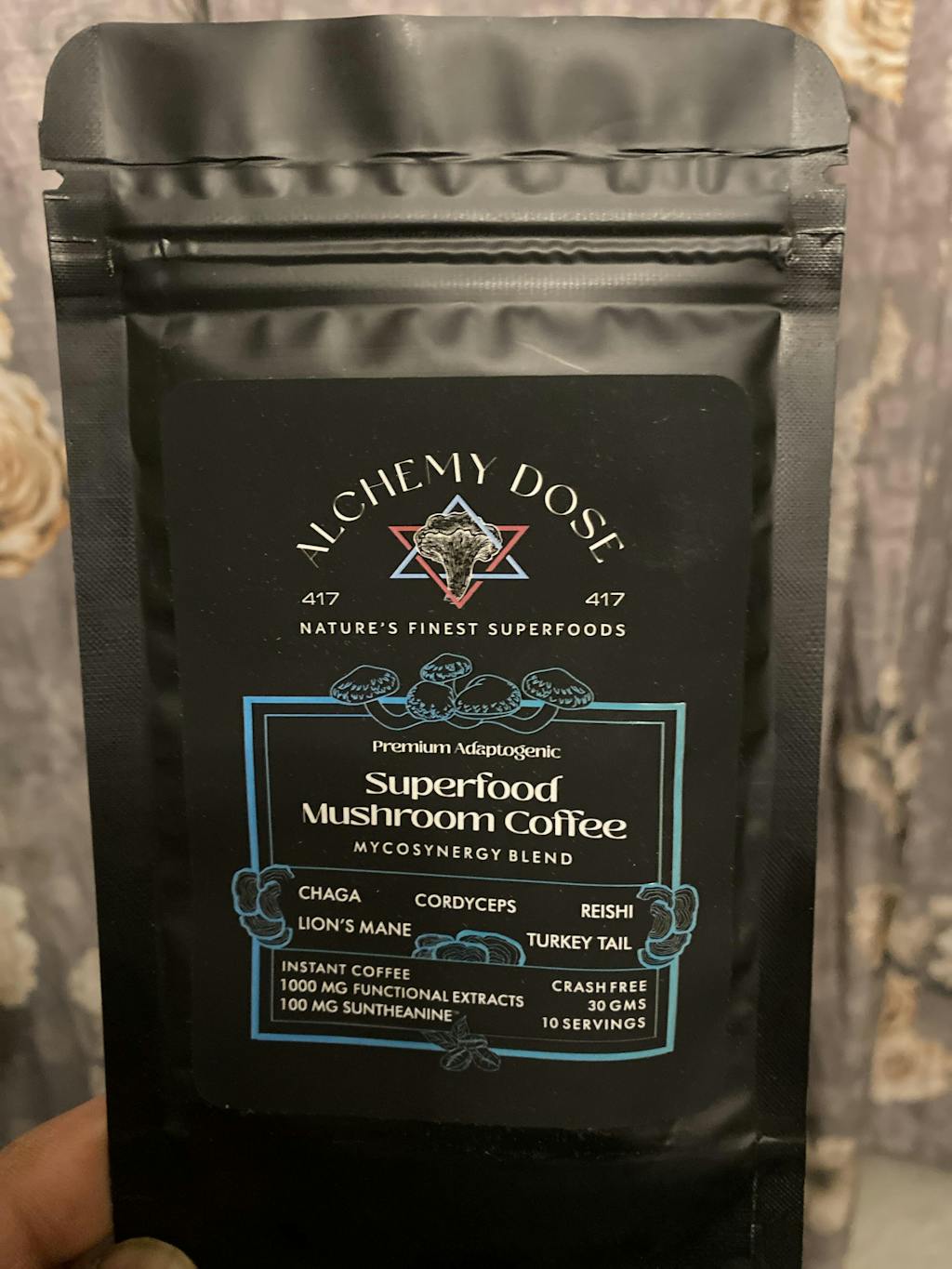
Mushroom Coffee with Suntheanine® & 5 Mushroom Mycosynergy Blend

V
Vaibhav Bhatter (Kolkata, IN)
Great blend

This is a really good mix of adaptogenics and it actually tastes quite nice. It doesn't feel like a coffee extract which is why I switched to this one from ACE. Definitely recommend it

N
Nara Lyabakh
Thank You so much!

Everything is fine . Delivery and good quality product,,

S
Shubhankar Gupta (New Delhi, IN)
Amazing Stuff!!

I was skeptical about "mushroom" coffee, but this tastes just like a smooth, premium dark roast. It has a very slight earthy hint, but it definitely doesn't taste like mushrooms.
The best part is the energy—it provides a clean, steady focus without the usual caffeine shakes or the mid-afternoon crash. It mixes easily and has become my daily go-to for a more productive morning. Highly recommended if you want the coffee ritual without the side effects!

D
Deepak Jalhan (Mumbai, IN)
This dose in life is amazing

I have tried all the different products of alchemy dose and it’s all amazing trust me I have seen a drastic change in me in terms of health upgrade.
More over I have suggest all my friends and my salon clients .